The Truth in the Jar: Why Clear Honey Labeling Matters
Walk down the honey aisle at any grocery store and you’ll likely see the words “U.S. Grade A Honey” printed boldly across multiple bottles. To the average shopper, that label sounds reassuring. It looks like it means the honey inside was produced in the United States, maybe even by hardworking American beekeepers.
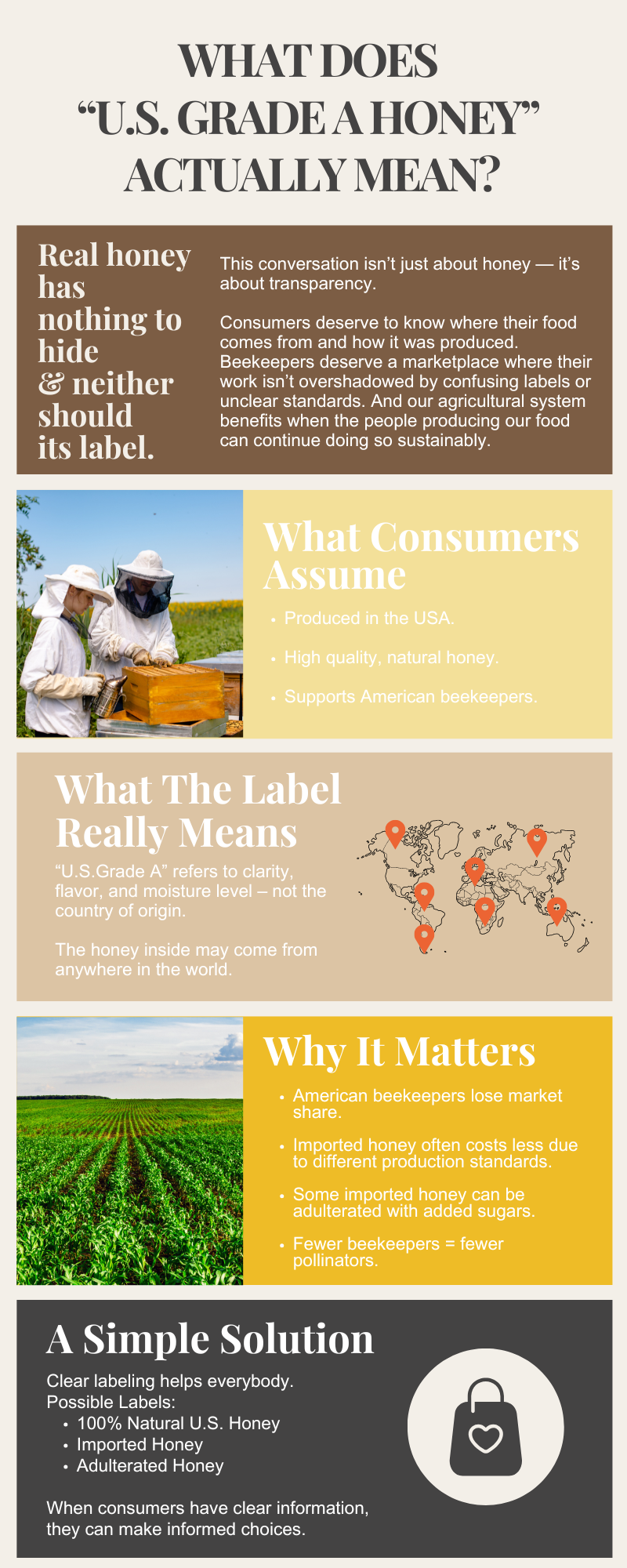
But here’s the catch: “U.S. Grade A” doesn’t mean the honey was produced in the United States.
Instead, it refers to a quality grading standard, not the country of origin. The honey inside that jar could come from anywhere in the world, with the actual source country listed quietly in small print somewhere on the label.
For many consumers trying to buy local or support American agriculture, that’s a confusing, and often misleading, experience.
Why This Matters for American Beekeepers
American beekeepers work incredibly hard to produce honey. It’s not just a product; it’s the result of countless hours managing colonies, caring for bees, and working with the rhythms of nature.
When imported honey enters the market at a lower cost, packaged with labeling that appears domestic, it can significantly impact U.S. honey producers.
Here’s how:
Lower demand for domestic honey.
If consumers believe they’re purchasing American honey at a cheaper price, they’re less likely to seek out the real thing.Market pressure on pricing.
Imported honey is often cheaper due to different labor costs, production standards, and regulatory environments. When those products compete directly with domestic honey under confusing labels, American producers are forced to compete against prices that are difficult, sometimes impossible, to match.Ripple effects across agriculture.
Honey production isn’t just about the honey itself. Many commercial beekeepers rely on honey sales as one of their primary revenue streams. When that revenue declines, fewer operations can remain viable.
And when commercial beekeeping declines, the impact spreads far beyond the honey aisle.
Bees play a critical role in pollinating the crops that make up much of our domestic food supply. Fewer beekeepers ultimately means fewer pollinators working in our agricultural systems. That affects everything from almonds to blueberries.
In short: healthy beekeeping industries support healthy food systems.
Why It Matters for Consumers, Too
Clear labeling isn’t just an industry issue, it’s a consumer issue. Today’s shoppers care deeply about what they’re putting into their bodies. In fact:
77% of consumers say they want to eat healthier.
85% of consumers pay attention to nutrition labels, though only about 41% feel they fully understand them.
90% of younger consumers (born between 1981–2012) prioritize spending on healthier food options, even during economic downturns.
These numbers tell us something important: people care about what they buy.
But when labeling creates confusion about what’s actually inside the jar, or where it came from, it becomes difficult for consumers to make informed choices.
Imported honey can also differ significantly from domestically produced honey in terms of oversight and quality standards. In some cases, honey on the global market may be adulterated, meaning it has been diluted or altered with additional sugars or syrups.
That’s not the transparency most shoppers expect when they reach for a jar labeled “Grade A.”
So How Do We Fix It?
Some voices in the industry point to tariffs on imported honey as a potential solution. Tariffs can help level the playing field in the short term by increasing the cost of imported products.
But tariffs come with one major challenge: they’re tied to politics.
Tariffs can change quickly depending on trade negotiations, international policy shifts, or political agendas unrelated to agriculture. What exists today may not exist tomorrow, making them an unreliable long-term solution for American beekeepers.
A more durable solution may lie in something much simpler: clearer labeling standards.
Imagine a system where honey labels clearly communicated what consumers actually want to know:
“Imported Honey” clearly marked on honey produced outside the United States.
“Adulterated Honey” labeling for products that have been altered or blended with other sweeteners.
“100% U.S. Natural Honey” for honey produced domestically that remains pure and unadulterated.
Legislation like this would create clear quality standards and transparency, helping consumers make informed decisions while ensuring producers meet consistent expectations.
It would also introduce something the honey market currently lacks: a meaningful barrier to entry based on product integrity and transparency.
Trust the Consumer
The good news is that American consumers have never had more choice, or more access to information, than they do today.
What you can buy at your local grocery store, you can almost always find online. Farmers markets, specialty stores, and direct-to-consumer brands have expanded access to locally produced food like never before.
Because of that, we believe something important:
If consumers are given clear, honest information, they will make thoughtful choices.
Most people want food that’s healthier, more transparent, and closer to home. They simply need labels that help them recognize those options when they see them.
In other words, the solution may not be convincing consumers to care. It may simply be giving them the clarity they deserve.
And when that happens, everyone benefits:
Consumers get the transparency they’re asking for.
Beekeepers get a fair marketplace.
And the bees…well, they get to keep doing what they do best.
Which is pretty sweet for all of us.
At the end of the day, this conversation isn’t just about honey, it’s about transparency.
Consumers deserve to know where their food comes from and how it was produced. Beekeepers deserve a marketplace where their work isn’t overshadowed by confusing labels or unclear standards. And our agricultural system benefits when the people producing our food can continue doing so sustainably.
Clearer labeling won’t solve every challenge facing the honey industry, but it would be a meaningful step toward a more transparent and informed marketplace.
Because when consumers have honest information in front of them, they tend to make thoughtful choices.
And if there’s one thing we’ve learned from the people who buy honey every day, it’s this: most folks simply want the real thing.